



In the ever-evolving landscape of digital marketing, SEO remains a crucial component of online success. However, as search engines become more sophisticated, the metrics that define effective SEO continue to change. Understanding and tracking the right metrics is essential to maintaining a competitive edge in 2025. In this blog, we’ll explore the most important SEO metrics that matter this year and how you can leverage them to improve your online presence.
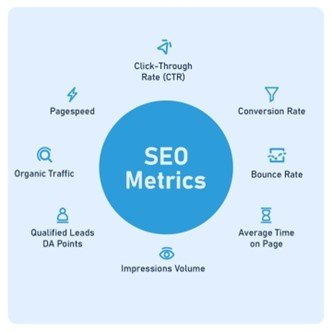
1. Organic Traffic
Organic traffic remains one of the most fundamental SEO metrics. It represents the number of visitors who find your website through search engine results, excluding paid ads. Tracking organic traffic provides insight into how well your website is performing in search engine rankings. In 2025, it’s essential to focus not only on the volume of organic traffic but also on its quality. Are visitors finding what they need? Are they engaging with your content? Quality traffic leads to higher conversion rates, making this metric more valuable than ever.
2. Keyword Rankings
While keyword rankings have always been a critical SEO metric, the approach in 2025 has shifted. Search engines are getting smarter, understanding user intent better, and delivering more personalized results. This means that instead of obsessing over ranking for a single keyword, focus on clusters of related keywords that reflect user intent. Tools like Google Search Console can help you track these keyword clusters, giving you a better understanding of how your content is performing across a range of search queries.
3. Click-Through Rate (CTR)
CTR is the percentage of users who click on your link after seeing it in the search results. A high CTR indicates that your meta titles and descriptions are compelling and relevant to users’ search queries. In 2025, optimizing for CTR involves crafting meta tags that not only include keywords but also speak to the user’s needs and interests. Rich snippets, structured data, and schema markup can also enhance your search listings, making them more attractive and clickable.
4. Bounce Rate and Dwell Time
Bounce rate measures the percentage of visitors who leave your site after viewing only one page, while dwell time refers to the amount of time a user spends on your site before returning to the search results. Both metrics provide insights into user engagement and content quality. In 2025, a high bounce rate and low dwell time can signal to search engines that your content isn’t meeting user expectations, potentially harming your rankings. Focus on creating engaging, valuable content that encourages visitors to explore your site further.
5. Page Speed and Core Web Vitals
Page speed has been a critical SEO factor for years, but with the introduction of Core Web Vitals by Google, it’s now more important than ever. Core Web Vitals are a set of metrics that measure user experience aspects like loading performance, interactivity, and visual stability. In 2025, ensuring that your site meets or exceeds Google’s Core Web Vitals benchmarks is crucial for maintaining and improving your search rankings. Regularly monitor these metrics using tools like Google Page Speed Insights and make necessary optimizations to improve the overall user experience.
6. Backlink Quality
Backlinks remain a cornerstone of SEO, but in 2025, the emphasis is on quality over quantity. Search engines are increasingly discerning about the sources of backlinks, favoring those from high-authority, relevant sites. A diverse backlink profile from reputable sites can significantly boost your domain authority and improve your rankings. Use tools like Ahrefs or Moz to monitor your backlink profile and identify opportunities for acquiring high-quality links.
7. Mobile Usability
With the majority of internet traffic now coming from mobile devices, mobile usability is a non-negotiable SEO metric in 2025. Google’s mobile-first indexing means that the mobile version of your site is considered the primary version for ranking purposes. Ensuring that your website is fully responsive, loads quickly on mobile devices, and offers a seamless user experience is critical to maintaining strong search engine rankings.
8. User Experience (UX)
User experience is becoming increasingly intertwined with SEO. In 2025, search engines are placing greater emphasis on how users interact with your website. Metrics like time on page, pages per session, and overall site usability contribute to your site’s UX score. A positive user experience leads to higher engagement rates, lower bounce rates, and ultimately, better search rankings. Focus on intuitive navigation, fast loading times, and relevant content to enhance UX.
9. Conversion Rate
Ultimately, the goal of SEO is not just to attract traffic but to convert that traffic into customers or leads. Conversion rate is a critical metric that measures the percentage of visitors who take a desired action on your site, such as making a purchase, filling out a form, or signing up for a newsletter. In 2025, aligning your SEO strategy with your conversion goals is essential. Ensure that your landing pages are optimized for conversions and that your SEO efforts are driving the right kind of traffic to those pages.
Conclusion
As we move through 2025, the importance of tracking and optimizing the right SEO metrics cannot be overstated. By focusing on the metrics that matter—organic traffic, keyword rankings, CTR, bounce rate, page speed, backlink quality, mobile usability, user experience, and conversion rate—you can ensure that your SEO strategy is aligned with the latest trends and best practices. Stay ahead of the curve by continuously monitoring these metrics and making data-driven decisions to enhance your website’s performance and achieve your business goals.
RELATED POSTS
View all


The Importance of Mobile-First Indexing: Why It Matters for Your Website
December 27, 2024 | by PTech Hub

The Ultimate Guide to Competitor Analysis: Tools, Techniques, and Tips
December 26, 2024 | by PTech Hub
